
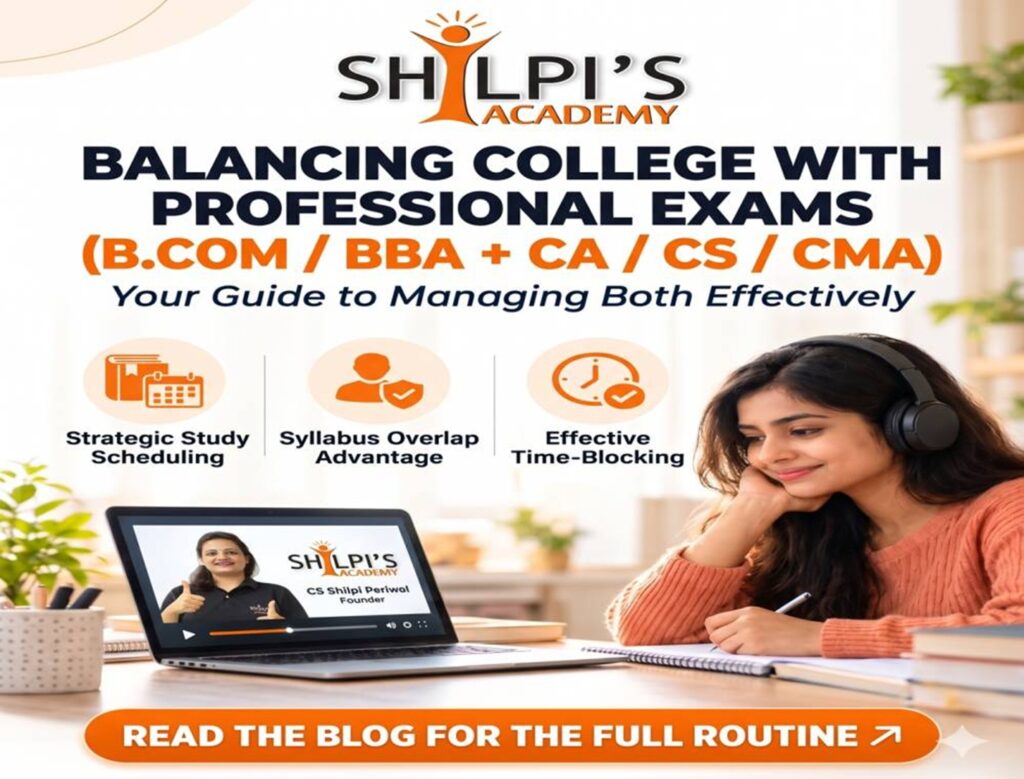
Pursuing a regular undergraduate degree like B.Com or BBA alongside a professional qualification such as CA, CS, or CMA is a demanding but manageable pathway. The real challenge rarely stems from lack of intent; it comes down to juggling college attendance rules, internal submissions, coaching hours, and daily self-study without hitting mental exhaustion. Success requires an integrated approach to your syllabus, strategic time allocation, and consistent execution.
1. Capitalizing on the Syllabus Overlap
A substantial portion of the foundation curriculum across CA, CS, and CMA directly mirrors the subjects taught in B.Com and BBA. Treating these as two separate tracks is the most common mistake aspirants make.
- Financial Accounting: Study topics at the professional exam level first. When you master partnership accounts, consignment, or corporate balance sheets with rigorous working notes for professional exams, university-level problems naturally become straightforward.
- Business and Corporate Laws: Professional exams test specific sections, case interpretations, and technical precision. Practice writing answers for your professional syllabus, and apply that same case-law depth to your college papers to secure high marks.
- Economics and Quantitative Aptitude: University exams prioritize descriptive explanations of concepts, while professional foundation tests emphasize analytical problem-solving and objective questions. Build your core fundamentals once, using the exact formulas and charts for both.
- Cost and Management Accounting: The standard cost accounting principles, marginal costing, and variance analysis apply universally. Prepare one cohesive set of formula summary sheets that serves both degree exams and professional modules.
2. Structuring Your Daily Routine
Expecting to complete eight hours of self-study after an exhausting day on campus is unrealistic. A sustainable routine relies on protecting dedicated study windows before and after college hours.
Weekday Schedule (College and Prep Days)
- 06:00 AM – 08:30 AM: Morning high-alertness window dedicated to technical problem-solving or dense legal concepts before campus obligations begin.
- 09:00 AM – 02:00 PM: College lectures, practical classes, and on-campus attendance.
- 02:00 PM – 03:30 PM: Commute, lunch, and an intentional mental break away from study materials.
- 03:30 PM – 06:00 PM: Online lectures, coaching modules, or targeted self-study lessons.
- 06:00 PM – 07:00 PM: Physical activity, dinner prep, or unstructured relaxation.
- 07:00 PM – 09:30 PM: Evening consolidation focusing on daily revision, homework questions, and brief summary notes.
- 09:30 PM – 10:30 PM: Dinner and winding down for consistent sleep.
Weekend and Holiday Schedule (Consolidation Days)
- 07:00 AM – 10:00 AM: Deep study block for heavy, conceptual subjects such as Advanced Accounts or Company Law.
- 10:30 AM – 01:30 PM: Practical numerical solving and self-evaluation exercises.
- 02:30 PM – 04:30 PM: Clearing pending video lectures, backlogs, or complex chapter recordings.
- 05:30 PM – 07:30 PM: Weekly revision, formula consolidation, and active recall practice.
- 08:30 PM – 10:00 PM: Timed practice papers, mock tests, or completing college internal assignments.
3. Practical Productivity Strategies
- Strategically Manage the 75% Attendance Requirement: Avoid aiming for 100% attendance at the cost of your professional preparations. Calculate your permissible leaves early in the semester. Protect that 20 to 25 percent buffer so you can take dedicated study leave two to three weeks before professional foundation exams.
- Reclaim Lost Travel Time: Commute hours add up quickly. Use travel time to listen to recorded legal audio summaries, business news podcasts, or revise flashcards on your phone rather than passive scrolling.
- Use College Free Periods Effectively: When classes get canceled or between library hours, avoid lingering in the cafeteria. A single 45-minute sprint in the library allows you to complete your daily revision before you even get home.
- Batch Academic Submissions Early: Knock out college projects, assignments, and presentations in the first month of the semester. Do not let minor college submissions pile up near professional examination windows.
- Active Recall and Summary Notes: Create concise, one-page summary sheets for long chapters. Writing these summaries yourself solidifies concepts and provides quick material to glance over between college classes.
4. Managing Clashes Between University and Professional Exams
When university term-end exams fall close to your professional test dates, split your focus strategically.
- The 10-Day University Exam Sprint: University exams tend to follow predictable patterns. Gather past five-year question papers ten days ahead of the exams, identify recurring broad themes, and practice structured, long-form answer formats with headings and clear points.
- Maintain Professional Study Touchpoints: Do not pause your professional preparation entirely during university exams. Dedicate 60 to 90 minutes each night to solve a couple of numerical problems or revise key legal provisions. This prevents conceptual rust and makes resuming your core schedule seamless.
Regular college develops communication skills, presentation ability, team dynamics, and provides a structured campus backup. While correspondence saves daily commuting hours, regular college is manageable for foundation and intermediate stages with disciplined time-blocking.
Aim for 3.5 to 5 hours of distraction-free study on weekdays, split between early mornings and evenings. On weekends, scale this up to 8 to 10 hours to clear recorded lecture backlogs and take practice tests.
Build your attendance balance in the first two months when the academic load is lighter. Maintain clear communication with your department professors, keep them informed about your upcoming exam dates, and submit formal leave applications backed by admit cards or registration proofs when required.
It is strongly advised to focus on one professional course alongside your regular college degree. Trying to balance two professional certifications simultaneously with college requirements often leads to severe split focus and academic burnout.